Navigating the Night Markets
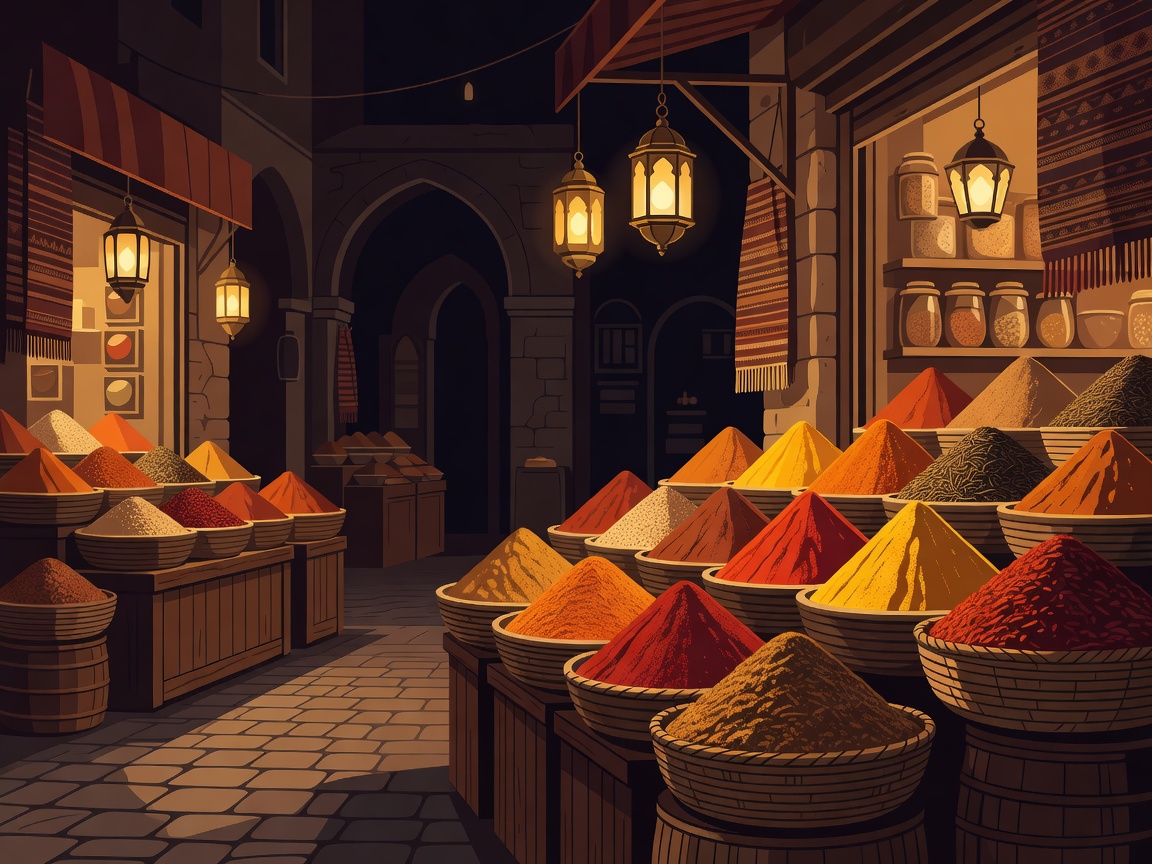
The souks and ancient bazaars of the Middle East and North Africa represent some of the oldest continuous street food cultures in human history. Here, food is intertwined with vendor lore—the stories, haggling techniques, and familial reputations built over generations of trading along the ancient spice routes.
The Smoke of Jemaa el-Fnaa
In Marrakech, as dusk approaches, the central square of Jemaa el-Fnaa transforms. It is a theatrical conversion. Dozens of food stalls are wheeled out and assembled in a matter of minutes. Soon, the air is thick with white smoke rising from charcoal grills roasting merguez sausages and lamb skewers. Vendors actively bark and compete for customers, using humor, poetry, and aggressive hospitality to draw diners to their benches.
"To eat in the souk is to participate in an ancient script. You are not just a customer; you are an essential character in a nightly performance of hospitality and trade."
In Istanbul, just outside the labyrinthine Grand Bazaar, street food is a more mobile affair. Carts bearing towering stacks of simit (sesame-crusted bread rings) navigate the crowds. Men carry brass urns on their backs, pouring strong, dark coffee or sweet tamarind sherbet for weary shoppers. Down by the Bosphorus, the scent shifts to balik ekmek, where vendors grill freshly caught mackerel on bobbing boats, serving it stuffed into crusty bread with raw onions and a heavy squeeze of lemon.
The lore of these vendors is tied deeply to their ingredients. A true falafel master in the markets of Amman or Tel Aviv knows exactly how long to soak the chickpeas, understanding the humidity of the air and the precise temperature of the oil to achieve a shatteringly crisp exterior and a fluffy, green interior laced with coriander and cumin. These are not recipes that can be learned from a book; they are absorbed through decades of observation.